
Posters Come in All Shapes & Sizes
One-Sheet. Quad. Grande. Locandina. Daybill. The terminology can sound invented to confuse you — it mostly just describes standard formats built for a particular country, industry or display space.
Learning these names is useful because format can help identify an original, explain why a poster is folded, tell you how difficult it will be to frame and reveal why the same film sometimes has dramatically different artwork around the world.
Dimensions can vary slightly because of trimming, production tolerances and period practices, so measurements should be treated as typical rather than an authentication test on their own.
United States
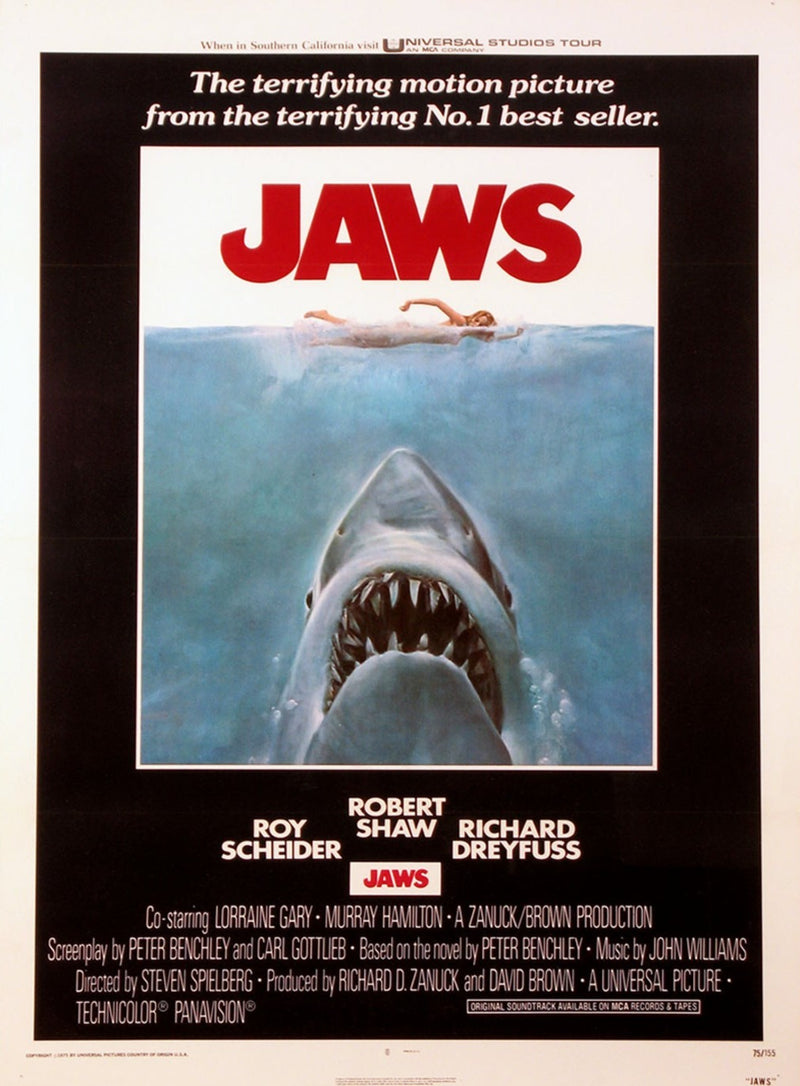
Jaws — an original US One-Sheet from our collection.
US One-Sheet
~27 × 41 in (pre–mid-1980s), ~27 × 40 in (mid-1980s to today)
The format most people picture when they think of an American movie poster. The height quietly changed by an inch when the industry standardised in the mid-1980s. Older examples were commonly distributed folded; later examples are often found rolled.
Half-Sheet
~22 × 28 in
A horizontal card-stock format used for cinema display. Artwork can differ substantially from the One-Sheet.
Insert
~14 × 36 in
A tall, narrow US format, usually printed on heavier stock. Particularly associated with earlier cinema advertising.
Lobby Card
~14 × 11 in
Usually issued as sets, often combining a title card with scene cards — a distinct format, not a miniature One-Sheet.
Window Card
~14 × 22 in
A card-stock format with space that could be used for local cinema information.
Three-Sheet
~41 × 81 in
A large theatrical format. Earlier examples can be multi-panel and make spectacular display pieces.
Six-Sheet
~81 × 81 in
An enormous cinema advertising format, usually encountered far less often than One-Sheets.

81 × 81″
A US Six-Sheet is square — almost seven feet in each direction — and was designed to dominate a lobby rather than sit neatly in a frame.
United Kingdom
British cinema posters are instantly recognisable once you know the shape to look for — the Quad's wide, horizontal format meant UK artwork often had to be composed completely differently from its American counterpart.
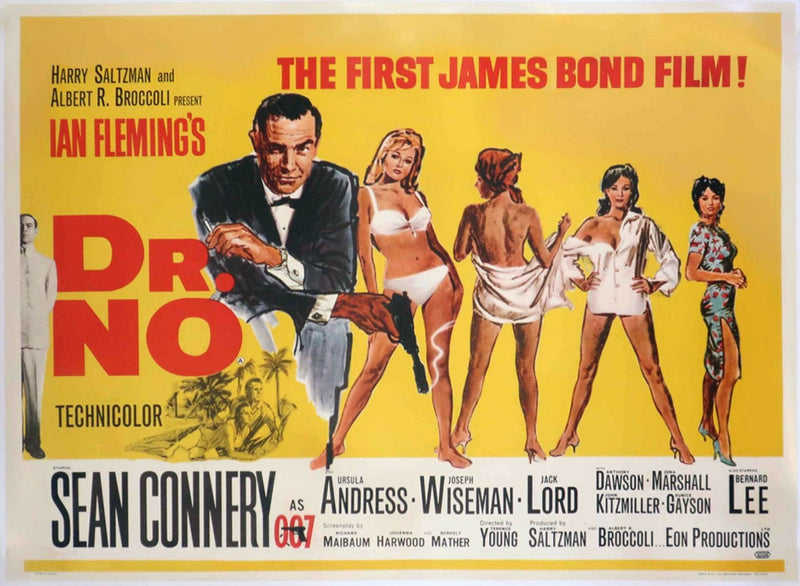
Dr. No — an original UK Quad from our collection.
British Quad
~30 × 40 in (landscape)
The classic UK cinema format and one of our favourites. Its horizontal shape often required completely different artwork from the US campaign.
Double Royal
~25 × 40 in
A tall British format used for both film and general advertising, seen less often than the Quad but a recognisable size in its own right.
Crown
~10 × 15 in
A small British format, most often seen in general advertising and travel rather than cinema.
Double Crown
~20 × 30 in
A versatile British format used across film, travel, advertising and other poster categories.
British One-Sheet
~27 × 40 in
A vertical format encountered alongside the Quad, although generally less synonymous with British cinema advertising.
Front of House Cards
Often ~8 × 10 in, with variation
Cinema display cards featuring scenes or promotional imagery, commonly produced in sets.

France
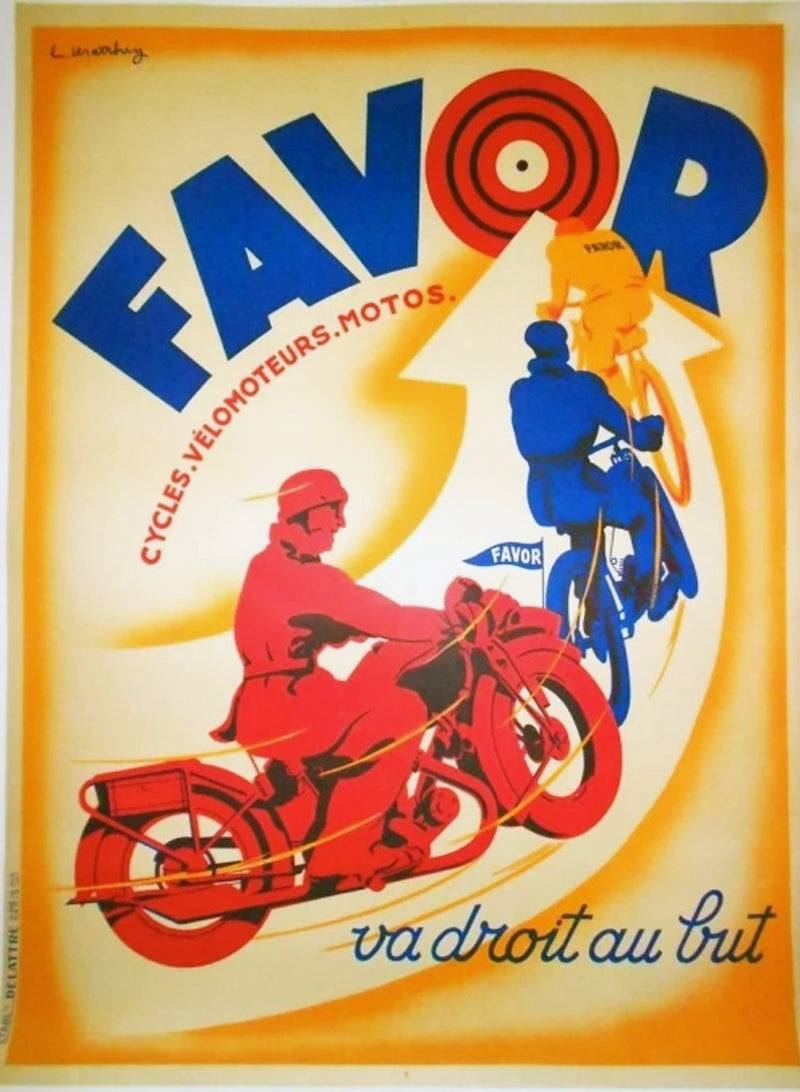
Favor Cycles — an original French poster from our collection.
French Grande
~47 × 63 in / 120 × 160 cm
The classic large French cinema poster. Grandes can be visually spectacular and were often folded for distribution.
French Moyenne
~23 × 32 in
A mid-sized French format, roughly half the area of a Grande — easier to display without losing the scale that French posters are known for.
French Petite
~15 × 21 in
The smallest of the three standard sizes, much easier to accommodate domestically than the Grande or Moyenne.
Large Multi-Panel Formats
Dimensions vary substantially
Made for large-scale exterior or cinema display, collected as much for physical impact as artwork.

Italy
Italian cinema posters run from the compact Locandina up to the Quattro Fogli — a genuinely enormous format that dwarfs almost everything else on this page.
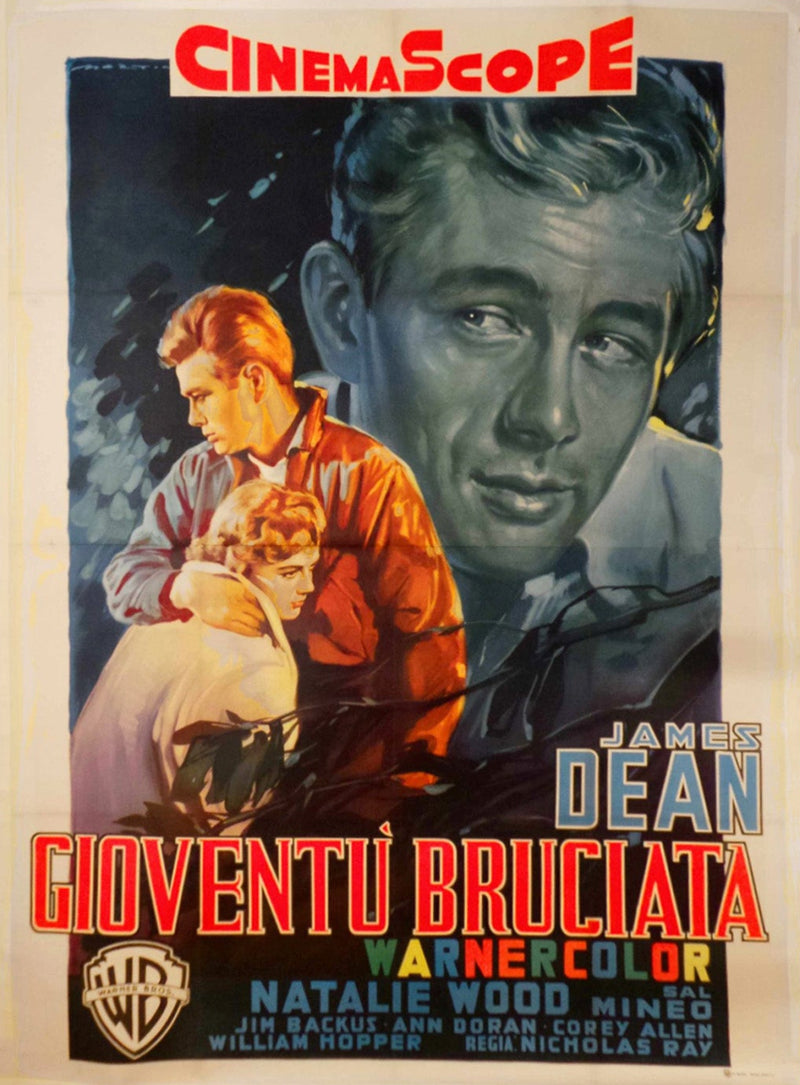
Rebel Without a Cause (Italian) — an original Italian poster from our collection.
Locandina
~33 × 70 cm / 13 × 27 in, with variation
A tall, narrow Italian cinema format. Compact by Italian standards and often beautifully illustrated.
Due Foglio
~39 × 55 in / 100 × 140 cm
A major Italian theatrical format with generous space for illustrated artwork.
Quattro Fogli
~55 × 78 in / 140 × 200 cm
One of the great large-format cinema posters — over four and a half feet tall. Extraordinary framed pieces, but they require serious wall space.
Fotobusta / Photobusta
Dimensions vary, often ~50 × 70 cm
Italian lobby-style posters, frequently combining photographic imagery and graphic design.

Australian, Japanese and Other Formats
Australia is particularly known for the Daybill, a narrow vertical cinema format whose dimensions changed over time. Japanese posters are commonly encountered in B1, B2 and B3 formats — based on the international B-series paper sizes — while the US Subway Poster is a large horizontal format built for transit display. Germany, Belgium, Poland and many other countries developed their own standard sizes and conventions again.
This is exactly why we avoid treating dimensions as a universal pass-or-fail authenticity test. The correct question is whether the dimensions make sense for the country, date, printer and specific issue being assessed.

Why the Same Film Can Have Different Artwork
International distributors did not always reuse the American campaign. Local artists, printers and distributors could reinterpret a film for their own audience. That is why collecting by country can be so rewarding: one title may exist as a vertical American One-Sheet, horizontal British Quad, enormous French Grande and richly illustrated Italian poster, each with a completely different visual personality.
Folded, Rolled or Flat?
Format and period often explain how a poster was originally supplied. Many older theatrical posters were folded as standard. A fold is therefore not evidence that somebody mistreated the poster after purchase; it may be exactly how the distributor sent it to the cinema.
Other posters were issued rolled or stored flat, and some folded posters have subsequently been linen backed so the folds sit flat. Always judge the individual issue rather than applying one rule to every poster.
Measuring a Poster Correctly
- Measure the paper itself, not the visible image area.
- Record width and height and note whether the orientation is portrait or landscape.
- Allow for small production and trimming variations in period material.
- If a measurement is substantially different from a known format, investigate further rather than assuming it is automatically wrong.
- For framing, use the actual individual poster measurement rather than relying only on the standard format name.
Ready to Browse?
Explore original posters by format, country and era in the Printed Originals collection.